
Addition Blog

Stay updated with our addition blog for tips, trends, and expert advice on remodeling projects.

Water Damage in Ottawa

Water Damage in Ottawa? Your Essential Guide to Repair

Did your home incur significant water damage in Ottawa? If so, it’s crucial to act fast – as wet surfaces and materials start to form mold and other severe issues after only 24 hours. As such, you’ll want to assess your damages and begin repairs as soon as possible. If the damage is severe and beyond your scope, don’t hesitate to call our highly trained and experienced team at 613-727-9427, and we’ll hop on your repairs immediately. If the damage is minimal, you may want to know if you can handle the repairs yourself. In that case, you’ve come to the right place – as we’ve prepared an extensive guide to repair water damage in Ottawa. Even if you haven’t experienced water damage in your home, it’s still beneficial to know how to deal with it properly should it occur. There’s quite a bit to know about water damage, and making the wrong move could spell disaster. Conversely, making the right decisions early on will go a long way toward restoring your home to its original state at a reasonable cost. Read on to learn the best practices involved with proper water damage repair. Along the way, we’ll cover: The three different types of water damage Mold inspection tips How to dry everything out What to throw away and what’s safe to keep Restoring and replacing drywall and siding Painting and caulking Knowing when to hire professionals Without further ado, here’s everything you need to know about repairing water damage in Ottawa. Is it Clean, Gray, or Black Water? The Three Types of Water Damage First things first, you need to determine which type of water has contaminated your home. If that sentence makes you scratch your head, you should know that not all water damage is the same. In particular, there are three types of water damage, each with varying degrees of severity. We didn’t just make this up, either. These are official rankings from the Institute of Inspection, Cleaning, and Restoration Certification (IICRC). They are: Clean water Gray water Black water Each has unique requirements for how you approach repairs, so let’s take a closer look at them. Dealing with Clean Water Damage The first and most accessible type of water damage to repair is from clean water – which is the least severe of the three, according to the IICRC. While it may seem nonsensical to refer to water flooding your home as ‘clean,’ it’s more about it being free of raw sewage and toxins, which will wreak even more havoc on your home and belongings. Clean water comes from: Busted pipes Sinks Bathtubs Water supply lines Rain As you can see, these are all ‘clean’ sources of water that don’t contain excessive toxins or raw sewage. As such, this type of water is the easiest to dry up and repair without causing too much lasting damage. If you have clean water damage in Ottawa, you should be able to repair it by yourself relatively quickly. Of course, it will also depend on how much clean water damage your home has incurred. Repairs should be straightforward and pain-free if there’s only an inch or two of water on the ground. Dealing with Gray Water Damage  Next on the IICRC severity scale is gray water – which is water that is slightly dirty or soiled – but not excessively. Gray water has more contaminants than clean water but still lacks raw sewage and severe contaminants. Gray water comes from: Toilets Washing machines Sump pump backups Dishwashers The waste and chemicals in gray water may or may not be directly harmful to humans, but it’s crucial to thoroughly disinfect your home to ensure the contaminants don’t cause problems down the line. You may also need to wear safety gear while repairing gray water damage to protect yourself from hazardous toxins (especially if the gray water came from a sump pump backup). At this point, you can still opt to handle the repairs yourself, but we recommend that you leave it to professionals like our team at RenosGroup. That’s because we’re well versed in cleaning/removing contaminated materials from bathrooms, kitchens, and basements to ensure that we restore your home to its original glory. Dealing with Black Water Damage  Black water is the most severe on the IICRC scale, and for a good reason. Black water contains raw sewage and hazardous toxins that are extremely dangerous. You should by NO MEANS attempt to repair black water damage in Ottawa by yourself. That’s because black water can cause severe health complications if you aren’t wearing the proper safety gear/taking the necessary precautions. The last thing you want is to have to contend with a life-threatening illness while your home is flooded, which is why you should ALWAYS call us at RenosGroup to repair black water damage. How do you know if your home is contaminated with black water? Here’s where black water comes from: Sewers Rising flood waters Seawater River water If your home gets flooded by a sewer overflow or rising river waters, you need to contact professionals for cleanup as soon as possible. Black water contains bacteria, human waste, and other serious contaminants – so your home will need to undergo extensive disinfecting before returning to normal. Your Repair Guide for Water Damage in Ottawa Now that you know about the three types of water damage, it’s time to learn how to repair damage from clean water and gray water. If you suspect the gray water has bacteria or contaminants in it, you should contact professionals for repairs. Yet, if it’s simply some water from a busted toilet, you should be able to handle it by yourself. Like anything else, there’s a right and wrong way to go about repairing water damage, which is why we’ve prepared this guide containing a step-by-step process for getting rid of water damage in Ottawa. Step #1: Inspect for Serious Issues Your first step should be to assess the damage as thoroughly as
Kitchen Remodeling in Ottawa - Lorraine Ave

Kitchen Remodeling in Ottawa: Cabinetry Guide

Whenever we consult with a client about kitchen remodeling in Ottawa, cabinetry is almost always the first subject that pops up, and it’s easy to see why. Your cabinets are often the central focal point of your kitchen, as they’re what catches the eye first. That means the cabinetry you choose will make or break your kitchen depending on their quality, color, finish, and style. The same is true for bathrooms, as well as basements that have guest rooms and kitchenettes. Yet, there’s quite a bit to know when selecting cabinetry for your home. Hundreds of designs, styles, materials, and finishes exist. You’ll also need to consider your budget and the overall feel you want your kitchen, basement, or bathroom to have. Considering this, we’ve compiled this extensive purchasing guide for kitchen cabinets. That way, you’ll know exactly what to ask for when consulting with a kitchen contractor in Ottawa – including a realistic price range, so you don’t exceed your budget. Stick around to learn everything you need to know about buying cabinets for your basement, bathroom, or kitchen remodeling in Ottawa. The Different Types of Cabinets First, it’s essential to familiarize yourself with the different types of cabinetry to determine your needs. Regarding kitchens, the design typically consists of base cabinets, wall cabinets, and pantry cabinets. The most popular bathroom options are Vanities, shaker-style, and louvered cabinets. Basements tend to feature wall cabinets and ample storage cabinets – but they can also feature base cabinets and pantries if they have a kitchenette. To discover what will work best for your renovation project, let’s take a more detailed look at each cabinet type. Base Cabinets Base cabinets serve two purposes; to provide storage space and to serve as a foundation for your kitchen’s countertop or sink. For countertops featuring materials like granite or marble, base cabinetry needs extra reinforcement to provide proper support. Kitchen sinks are also heavy and require a strong foundation, which is where base cabinets come into play. They hold up your sinks and countertops so you can work at standing height and provide convenient storage space for appliances, cleaning supplies, and more. In particular, there are two types of base cabinets: Sink base cabinets. These cabinets are specifically designed to support a kitchen sink – which is why they have an open back and a false drawer in front (it’s to work around your plumbing without drawing attention to it). They also provide storage space, and they come in a wide variety of colors and styles. Corner cabinets. These are the cabinets that occupy the corners of your counter space. Several types of corner cabinets help you get the most out of your kitchen. Blind cabinets feature half a standard cabinet, with the other half being the corner of the adjacent cabinet. Lazy susan cabinets have rotating bases so you can easily access items in the back. On average, base cabinets are around 24-inches deep with a few different options for width. Without a countertop, they average 34 inches in height. With a countertop, it jumps up to 35 to 36 inches. Wall Cabinets As the name implies, wall cabinets mount to the walls in your kitchen. Since they’re up high, these cabinets matter the most for visual appeal. They’re the focal point of the entire room, so it’s imperative to select the right style and material for them. They come in various heights and widths, as some wall cabinets are shorter and hover over appliances like microwaves and refrigerators. Others are taller and typically reach up to 40″ inches in height. Most wall cabinets feature adjustable shelves, with the height determining the number of shelves you can have. Depending on the width of the cabinets, they can be a single door, double door, or even triple door if there’s enough room. Like base cabinets, there are also corner wall cabinets – the most popular type being angled corner cabinets. They’re typically 12-inches deep and 12 to 42-inches wide. There are many ways that we can add visual flair to your wall cabinets through our Ottawa kitchen remodeling, such as: LED lighting arrangements Artistic glass inserts Decorative framing and door designs It’s also possible to raise or lower wall cabinets for accessibility reasons. Pantry Cabinets for Ottawa Kitchen Remodeling Pantries start at the floor and are usually quite tall. Typical heights range from 84-inches to 96-inches, with widths ranging from 12 to 36-inches. Besides serving as a pantry, these tall cabinets also work as a way to house wall ovens and refrigeration units. Yet, the most common use is as a pantry, and they usually have two doors and up to three adjustable shelves. A pantry is necessary for any Ottawa kitchen remodel, as you want plenty of room to store all your non-perishable (and perishable) food items. Without one, you likely won’t have enough storage space for all your food, which leads to unsightly clutter (such as cereal boxes stacked on top of the fridge). It’s common for pantries to have top and bottom sections. The top has three adjustable shelves, and the bottom is either open or has more storage options like pull out shelves. Shaker-Style Cabinets In our experience with Ottawa kitchen remodeling, shaker-style cabinets are among the most popular for both kitchens and bathrooms. They provide a timeless appeal that never goes out of style and work great for achieving the farmhouse kitchen look. A shaker-style cabinet features five components: Two stiles Two rails A recessed panel in the middle Shakers mix well with glass inserts, and it’s easy to spruce them up with millwork to add some visual flair. Glass-Front Cabinets Do you want to add ritz and sophistication to your kitchen cabinetry? If so, there’s no better way than by adding glass-front cabinets. They’re popular for wall cabinets, base cabinets, and cabinets under kitchen islands. While you probably don’t want to use glass-front cabinets for every cabinet, it looks stylish to mix and match. In particular, glass-front cabinets

Guide to Carpentry in Ottawa

An Extensive Guide to Carpentry in Ottawa

If you want to renovate your home, the chances are high you’ll need to find skilled carpentry in Ottawa.   Carpenters are involved in everything from building custom cabinets to doors and window frames. If you’re seeking quality renovations, you’ll need to know a bit about the basics of carpentry. This knowledge will help you find and hire the best contractor in your area (as well as the right specialty.) It may not seem like there’s much to it. Yet, carpentry is an expansive field that’s as old as time. You’ll need to know about carpentry’s essential skills, specialties, and training. That’ll help narrow down the search when looking for a carpenter in Ottawa. If you don’t take it seriously and hire a cheap/unskilled carpenter – your results will look less than stellar. That’s why it’s worth learning more about carpentry to ensure your renovations come out looking fantastic. Finding a skilled carpenter will also help you save money in the long run since you won’t have to pay for expensive repairs to fix mistakes.  Here’s an example of what we mean, does your project need a farmworker, framer, or cabinet maker? If you aren’t sure, you’ll need to do a little homework first to avoid wasting your money. Luckily, we’ve prepared this handy carpentry guide to fill you in on everything. Nailing the Basics: What is Carpentry? Let’s begin with a plain English definition of carpentry. It’s the art of working with wood to construct buildings, frames, and other objects. Woodworking and joinery also fall under the umbrella of carpentry. Here’s a breakdown of their subtle differences: Carpentry is a trade that strictly uses wood for construction. It primarily refers to the construction of buildings with timber. Woodworking is the craft side of carpentry, such as constructing cabinets and furniture. Joinery is constructing frames and panels by creating and installing fittings. There are carpenters, woodworkers, and joiners to go along with these crafts. (That’s not to mention the different specialties within each, but more on that later.) Let’s consider a few examples to make things easier to understand. In example #1, you need a professional to construct a custom nightstand for you. Would you need: A.) A carpenter B.) A woodworker C.) A joiner If you guessed B.), you’re correct. Woodworkers specialize in handcrafting furniture, cabinets, and other wooden objects. As such, if you want a custom nightstand, you need to call a talented woodworker. A joiner or a carpenter won’t have the necessary skills – unless they moonlight as a woodworker. In example #2, you need someone to construct an entire shed in your backyard. Would you need: A.) A carpenter B.) A woodworker C.) A joiner In this scenario, A.) is the correct choice. A carpenter will have the skills and wherewithal to construct the entire shed on-site. A woodworker lacks the know-how to build a building from scratch. Instead, they focus on creating objects and furniture. All right, in example #3, you need someone to build a new window frame for you. Would you need: A.) A carpenter B.) A woodworker C.) A joiner The answer is C.), as a joiner constructs frames, doors, and other joinings. They tend to work isolated in their shops and don’t work on location. By now – you should have a better understanding of the difference between the three crafts. While they’re all technically forms of carpentry – there are tiny differences – as these examples have shown. Carpentry in Ottawa – Basement Framing in Orleans The Different Types of Carpentry Within carpentry, there are various styles and specialties. In particular, there are two primary types of carpentry that we’ll focus on in this section. They are rough carpentry and finish carpentry. Here’s a detailed breakdown of both. Rough Carpentry If the carpentry work doesn’t need a brilliant finish, there’s no need to waste time and money applying one. For instance, if walls and paint hide the carpentry work – a rough job will suffice. This type of work is rough carpentry, and it’s more about doing quality work than making it look pretty. Most of the time, rough carpentry refers to structural work. Structural carpenters erect rafters, posts, and beams for a new building. With this type of work, efficiency and sturdiness are what matter most. There’s no need to make the rafters and beams aesthetically pleasing – as no one will see them. Rough carpenters find lots of work in roofing and framing new buildings. A structural carpenter puts together the skeleton of a building. They also have to pay close attention to safety codes and regulations. Remember, if you’re after a visually pleasing job, you don’t need a rough or structural carpenter. You will need one if you’re constructing a new building and need a solid foundation for it. Finish Carpentry A finish carpenter is the polar opposite of a structural carpenter. Finish carpentry is all the work that will be visible once a building gets completed. That’s why finish carpenters put a lot more effort into making their work look excellent. Finish carpenters boast great attention to detail. They install trim, molding, decks, staircases, and so much more. If you want a carpenter to build an elegant staircase with a stunning finish – you need a finish carpenter. They will go to great efforts to make their work look outstanding. For constructing a new building, you’ll need rough carpenters and finish carpenters. The rough carpenters knock out the foundation, while the finish carpenters make it look pretty. You’ll want to hire both if you’re constructing a building from scratch. Trim Carpentry Is your Ottawa home in need of a new fireplace mantle? If so, you’ll want to give a trim carpenter in Ottawa a call. They specialize in creating wood trims and moldings for homes. That includes fireplace mantles, ornamental trim, skirting boards, and so much more. Other types of carpenters may not be as familiar with installing trim, so it’s best to use a trim

Guide to Bathroom Renovation in Ottawa

Ultimate Guide to Bathroom Renovations in Ottawa

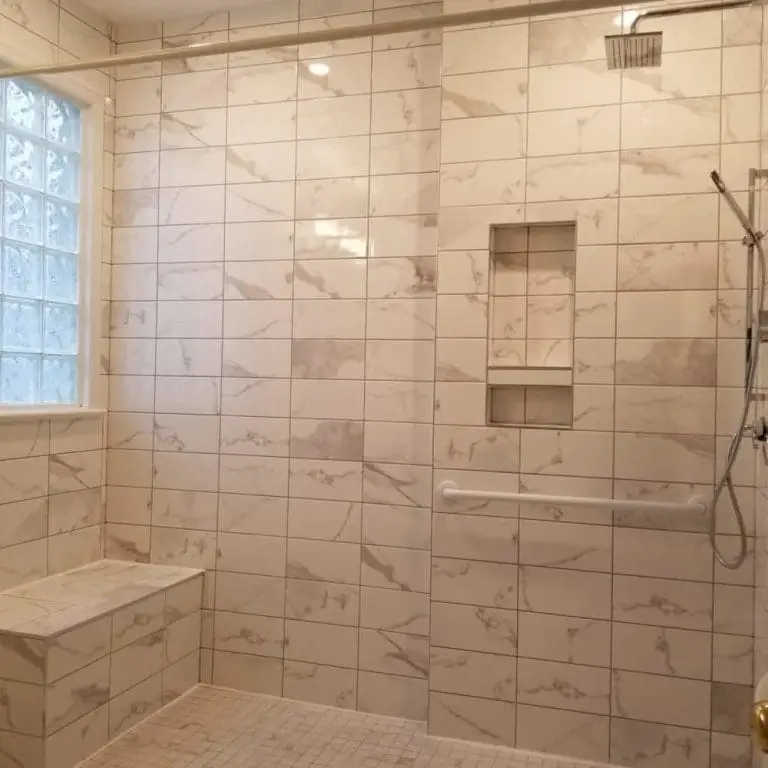
Are you thinking about renovating your bathrooms in Ottawa?  Renovating a bathroom is a considerable investment, so it’s worth doing it right.  That’s why we’ve created the ultimate guide to bathroom renovations in Ottawa. The last thing you want is to spend thousands on a subpar renovation that looks worse than the original. Yet, that can easily happen if you don’t know what you’re doing. That’s why it’s worth doing a little research before getting started. Luckily, we’ve compiled everything you need to know in this handy guide. Read on to learn what it takes to set up a successful bathroom renovation in Ottawa. Start with the Basics: Create a Wishlist Before you do anything, you need to determine what you want out of your bathroom renovation. You may know that you want renovations but haven’t pinpointed the exact modifications you wish to make. Now is the time to do that, and you can do so with this questionnaire: What do you not like about your bathroom the most? Which modification takes precedent over the rest? (i.e., installing a new shower to get rid of mold is more important than a new sink) Is the layout of your bathroom convenient, or could you make some changes? (i.e., new shelving or layout to make the most efficient use of space) Do you like your current color scheme, or would you like to change it? What would your dream bathroom look like? Does your bathroom have accessibility issues? (i.e., an elderly resident has trouble standing in the shower) How many people use your bathroom, and do they have enough space? Do you want a portion of your bathroom to be private? What aesthetic changes would you enjoy the most? (i.e., new tile, vanity, color scheme, etc.) These questions will help you narrow things down in terms of renovations. From there, make a list of the modifications that you want the most. That will help you during the next step, which is determining your budget. Be Realistic With Your Budget This step is easy to screw up, even if it doesn’t seem that way. You’ll want to create a realistic budget within a specific ‘sweet spot.’ You want to pay enough to get quality work done, but you don’t want to go broke in the process. At the same time, going with cheap contractors is never a good idea. Consider how much money you have available. You’ll want at least $15,000 – $20,000 available for the renovation to achieve desirable results. That’s the average price range for a single bathroom renovation, considering you don’t want to change the layout or plumbing. Once you know how much money you have, it’s time to start comparing prices for the job. Here are some tips for discovering how much your project will cost: Check out online trade shows and slideshows. Renovation companies often have trade shows/slideshows available for their products. They’re a great place to start researching how much your renovation project will cost. Try to find at least 5 to view the Ottawa area to see how much the prices differ. Flip through renovation magazines and websites. There are plenty of publications out there that list bathroom renovation products. You can use them to determine how much sinks, toilets, showers, and new tile will cost. Get quotes from contractors. Next, you’ll want to contact local contractors in Ottawa. As with the slideshow, reach out to at least five contractors and more if you can. The idea is to compare their quotes not only against each other but against your prior research. Since you’ve done some digging and know how much the components will cost – you’ll have a better idea of what contractors should charge. Taking those steps will help you find contractors that charge realistic rates. Of course, price isn’t everything when finding a contractor. You’ll also want to look closely at their reputation and past work. Try to find an online gallery containing photos of their completed projects. Also, find several websites listing reviews of their services. The ideal contractor charges fair prices and has an impeccable reputation. Plan for the Unexpected Our final budgeting tip is to leave a little wiggle room in it. Provide yourself with a 10-20% cushion just in case you run over budget. Why’s that? It’s because it’s very common to spend at least a little more than what you planned on renovations. You may find that you want to add extra fixtures and finishes during the process. You can add them without any headaches if you have that budget cushion. You’ll especially need a budget cushion if you’re making significant changes to your layout. When the contractors begin tearing down walls – they may find mold or need to do expensive drywall repairs. That’s why it’s always a good idea to add that 10-20% cushion just in case something pops up. An Overview of Bathroom Renovation Fixtures and Finishes You can do and change a lot with a bathroom renovation. Many components go into renovating a bathroom. There are various fixtures, finishes, vanities, cabinets, and more. Here’s a look at the elements you can change with a renovation. Cabinetry & Vanities (Storage Options) First, you’ll need to decide what to do with your storage. Does your bathroom have enough room to store all your toiletries and accessories? If not, you’ll want to add additional cabinetry or a vanity. A vanity should have storage areas for makeup, towels, and a mirror. Cabinetry is ideal for storing toiletries and grooming items. You can choose from framed or unframed cabinets. Also, it’s possible to hide the hardware and fixes for a more contemporary look. Next, take a look at the feasibility of your layout. Is there anything inconvenient that you want to change? An example would be that you have to walk to the other side of the bathroom to get your hair straightener. That’s an inconvenience, and renovating can remedy it. Ask your contractor to install a shelf,

Guest Suite Basement

Creating the Perfect In-Law or Guest Suite Basement

Whether crafting a basement suite for guests or to host in-laws, achieving the ideal basement renovations for Ottawa families demands a thoughtful plan. Ensure comfort and functionality as you transform the space to meet your unique needs. For guest suite basements, sometimes a good place to start is to look at hotel suites or even retirement home layouts, as they share some distinct similarities, such as: A Living Space The majority of the basement should be open for a comfortable living space. It’s essential to consider the needs of your guests occupying the suite. That will help create a living space that they enjoy and appreciate. If you’re creating an in-law suite in Ottawa, what do they usually like to do? If they’re into movies, including a TV and a sofa is a good idea. If they prefer reading instead, some recliners with ample lighting are the way to go. Conversely, if you’re designing a granny suite – mobility and accessibility are concerns. You’ll want to make sure the living space contains no trip hazards or items too far out of reach. You’ll also want to consider building code requirements, ceiling heights, insulation, and more. These will all play a part in your renovations, so it’s crucial not to ignore them. (More on regulations and insulation in a bit.) From there, you can then determine if a kitchen is realistic. Kitchen/Kitchenette If the space allows, a kitchen is ideal as it will give guests or in-laws complete independence. If you’re limited on space, you may be able to squeeze in a kitchenette. A refrigerator and microwave are all you need for your suite most of the time. After all, that’s what most hotel suites include as a kitchenette. If you have more space, you can go for a full kitchen. That means an oven, stove, counter space, and possibly more. If your in-laws/parents enjoy cooking, they’ll appreciate having a kitchen to use. That way, they can prepare their own meals if they prefer not to bother you upstairs. Common appliances for kitchenettes include: Mini-fridge Coffee maker Teapot Hot plate Microwave Sink Toaster Larger appliances such as an oven will require a special outlet, so bear that in mind. Ultimately, it will all depend on the amount of space you can dedicate to a cooking area. If you want to add extra storage space to the kitchenette, think vertically. If you don’t have room for an island or counter – you can add shelving above (or below) the kitchenette. If you have elderly parents, it’s a better idea to include the shelving beneath rather than above. Built-ins Built-ins are a great idea as they can take the place of furniture that might be cumbersome and use up much-needed floor space. You can use built-ins in a buffet style with a sink and built-in microwave and bar fridge if there is no space for a kitchen. A fold-down dining table can also be added for eating as well as recreation. You can also use built-ins around a fireplace or desk space providing shelves for needed storage. Built-ins can be used to hold decorative items or to store collections of movies. When renovating your basement, you’ll have plenty of opportunities to add built-ins. Try to keep a keen eye open when analyzing your basement space. Could you add a built-in dining table that folds down from the wall? Or would it be better to add a built-in bookshelf for all your in-laws’ books? You can create built-in benches that attach to the walls to add more seating. That can add extra seating for a dining room table or just for general lounging/reading. The catch of a built-in is that you’ll be stuck with it for life. As such, you need to put plenty of time and thought into what you want from a built-in. The last thing you want is to get stuck with a built-in that has no function and is an eye-sore. Sleeping Area If space for a door swing is not practical, you can consider a number of options for privacy in the sleeping area. Pocket or sliding doors offer privacy and take up less space. You can also consider using partition walls for separation. If the light is sparse and the bedroom area is near one of the only windows consider using frosted glass partitions so you do not block out the needed natural light. Whether it’s an in-law suite or granny suite in Ottawa, they’ll need a place to sleep. It’s wise to consult with them beforehand to learn what they prefer bed-wise. Do they sleep best on memory foam-style mattresses? Or can they not sleep a wink unless they’re in total darkness on a water bed? Once you know their needs, you can begin constructing the sleeping area. The good thing about a basement is that it stays nice and dark. Yet, that might not be very comforting for some. The lighting plays a big part in the construction of any sleeping area. If your in-laws don’t like total darkness, night lights or lights with dimmers are what you need. If you don’t want to use an open floor plan – you’ll need to find a way to separate the sleeping area from the living space. Besides partition walls, rugs are a reliable way to separate each area visually. Bathroom Especially in the case of an in-law suite you want to consider the mobility of your parents. This will play an important role in the type of shower or tub you choose. A good compromise is to add a shower stall with a bench and handheld showerhead so it is easy to bathe, but can also then be used by other family members or guests should your in-laws move. Every in-law suite in Ottawa needs a bathroom. That’s doubly true if you’re designing a granny suite. Elderly parents often have mobility issues that you need to take into account. If they have trouble reaching things in

How to Avoid Mold & Mildew in Your Home

How to Avoid Mold & Mildew in Your Home

Once your bathroom renovation is complete and your home looks stunning, you want to keep it looking in mint condition for as long as possible. These care and maintenance tips will extend the longevity of your bathroom renovation and help you avoid mold and mildew growth: What are Mold & Mildew? Mold and mildew are collections of small organisms (called spores) which thrive in wet and moist environments – like your bathroom. If you don’t clean your bathroom properly, mold spores start to grow and are eventually released into the air. You then inhale these spores into your lungs, which can be problematic for people with compromised immune systems or breathing conditions like asthma. Common health effects include difficulty breathing, coughing, sore throat, and headaches. Mold causes the most problems during the summertime – as it thrives in humidity. Yet, if the conditions are right, mold can wreak havoc in the winter as well. Mold and mildew will contaminate your indoor air quality. If you’ve been having trouble breathing inside – mold may be the culprit. Beyond coughing and wheezing, extreme cases can cause neurological issues and even death. That’s why every homeowner needs to take mold seriously. It’s crucial to know how mold forms and where it can pop up. That will help you prevent mold from forming in the first place, which is always the best solution. Once mold shows up, it can be challenging to get rid of entirely. What’s the Difference Between Mold and Mildew? While mold and mildew are both forms of fungi – there are subtle differences. For one, mold is a prevalent component in household dust. Mildew, on the other hand, tends to grow on flat surfaces. It appears on organic materials, such as paper, leather, wood, walls, and ceilings. The two also differ in appearance and odor. Mold tends to be black, blue, red, or green. It also has a notoriously slimy texture and can at times contain fuzz. Mildew starts off as white – distinguishing it from mold. In its later stages, it starts to turn shades of yellow and brown. Instead of slime or fuzz, it’s very powdery in texture. Both require organic material in order to form. It’s what serves as a food source for fungal growth. That’s why mold and mildew always form on materials such as wood, leather, paper, and textiles. You can tell the two apart by their smell. Mildew’s odor is pretty mild and smells musty. It’s often compared to damp laundry that hasn’t dried. Mold’s odor is a lot more pungent and powerful. That’s because as the mold continues to grow, it forms microbial volatile organic compounds or MVOCs. The final distinction is mildew forms on surfaces while mold burrows underneath. So if you see fungal growth on the surface of your cabinets, that’s a dead giveaway that it’s mildew. Mold always forms beneath the surface – inside walls and in crevices and holes. That makes mold harder to locate – which can lead to it growing out of control. The Conditions Where Mold and Mildew Thrive Any time there’s high heat, a food source (organic material), and a fair amount of humidity – mold, and mildew can form. For this reason, June through August are the most problematic months. It would be best if you kept a close eye on your walls, ceilings, and underneath sinks during these months. Yet, if you’re running your heat in the winter and there’s humidity – mold and mildew can form then, too. If temperatures are between 77° and 87°, and humidity is between 62 and 93 percent, you’re in the danger zone. Bear that in mind whenever you’re inspecting your home for mold and mildew. Here’s a list of the most common molds that show up in homes: Alternaria Aspergillus Chaetomium Cladosporium Fusarium No matter what type of mold forms in your home, they all have one thing in common – they need to go. All kinds of mold can be dangerous, which is why you need to eliminate them. The good news is there are ways to prevent mold and mildew from forming in the first place. Areas to Check for Mold & Mildew in Your Home You’ll need to know where to look for mold and mildew in your Ottawa home. Otherwise, you won’t even know that you have a mold problem. That’s the last thing you want, as out-of-control mold can do some severe damage to your home. Not only that but eliminating it will be a costly endeavor. The best thing you can do is regularly inspect your home to prevent its formation. Here are the most problematic areas you should check during hot/humid months: Your ventilation ductwork The area surrounding your HVAC system Underneath sinks Areas around sinks and faucets in bathrooms and kitchens Tubs, showers, shower curtains Any area that sees a lot of moisture (i.e., cabinets next to the shower) Dishwashers and laundry machines The areas surrounding your dishwasher In and around your refrigerator As long as you keep a close eye on these areas – you’ll prevent most mold and mildew from forming. Yet, mold can form inside of your walls and other areas that you can’t see. That’s why it’s a good idea to learn how to do mold testing for your home. Mold Prevention Tips All right, now it’s time to learn how to mold-proof your home. After all, that’s the best way to avoid all the headaches that go along with mold and mildew infestations. If you do your due diligence – you won’t have to worry about contending against mold or mildew. Here are our top tips for preventing mold and mildew from forming in your Ottawa home. Keep Your Humidity Levels Down As stated before, mold and mildew thrive in humidity. If your home or apartment is especially humid – you can bet that mold and mildew are forming somewhere. Since we know that mold and mildew love humidity – an excellent

Bathroom Renovation Ottawa

General Contractors in Ottawa: Why RenosGroup is the Best

Are you thinking of undergoing home renovations? If so, you need to hire reputable general contractors in Ottawa that places your needs and total satisfaction above all else. That’s how we feel at RenosGroup, which is why we continue to offer free in-home consultations for every new client. For us, it’s a matter of common decency. After all, nobody can possibly give you a realistic estimate without setting eyes on your property first – which is something that a growing number of general contractors in Ottawa will charge you for. Unlike them, we’ll show up at your home completely free of charge. More importantly, we’ll give you plenty of time to let us know precisely what you want. Leave no stone unturned, as we’re never in a rush when we consult with new clients.  Our team will measure everything, answer your questions, and write a detailed estimate for the project’s total costs. The best part? The free in-home consultation is completely obligation-free. If you decide that you don’t need renovations (or would like some time to think about it), that’s no problem for us – and you won’t incur any charges. Thanks to our expertise and years of experience, we provide flawless: Home renovations Bathroom renovations Kitchen renovations Basement renovations Mobility renovations Home additions Whether you want to transform your basement into a studio apartment or lower your bathroom fixtures by a half-inch, we do it all at RenosGroup. Read on to learn more about our home renovation services in Ottawa. Ottawa’s Finest Kitchen Renovations and Products It’s hard to drum up the desire to cook in a kitchen that isn’t: A) Visually pleasing B) Laid out practically You need a better layout if you have to do three laps around the kitchen to grab pots, pans, and appliances before you can start cooking. At RenosGroup, the only limit is your imagination. We can incorporate many clever storage options such as open shelving and kitchen islands. Our team will ensure that you have everything right where you want it, even if we have to restructure your kitchen completely. For visual appeal, no other general contractor in Ottawa can touch the quality of our kitchen products, custom cabinetry, and quality craftsmanship. We also have an in-house interior designer that you can consult with to completely rethink the way your kitchen looks. Top-Tier Bathroom Renovations Your bathrooms are some of the most used rooms in your home, so it’s crucial not to neglect them. That’s why we offer the whole gambit when it comes to bathroom renovations, including: Countertops Cabinets New fixtures, sinks, and toilets Custom showers Tile Our team boasts exceptional knowledge of the bathroom renovation process, which tends to be a delicate one. An easy example, we know never to install drywall behind shower and tub surrounds due to its tendency to absorb moisture and grow mold. Our trained, licensed, and insured professionals know how to safely renovate your bathroom with zero issues or need for repairs. Polished Basement Renovations and Transformations Are you only using basements to air-dry your laundry? If so, you aren’t making the most of your available square footage. Your basement is a very much usable room in your home, and you can transform it into whatever you want with our help. We’re the best general contractors in Ottawa at turning dull basements into: Luxurious studio apartments Home movie theaters Game rooms A nursery or playroom As you can see, your basement is more of a blank slate than it is storage space. Helpful Mobility Renovations in Ottawa Do you live with an older loved one that has trouble getting around? If so, don’t wait to reach out to us to renovate your home to make them more comfortable. We offer all manner of accessibility renovations, including: Raising and lowering fixtures Adding rails Installing lifts and elevators Making showers and tubs more accessible/easier to get into Our team will go to rigorous efforts to ensure that your home is adequately mobile-friendly to keep your loved ones comfortable and safe. Our unwavering commitment to our customers is a big factor that sets us apart from other general contractors in Ottawa. Stunning Home Additions If you don’t feel like moving, but your current Ottawa home isn’t cutting it for you, don’t wait to check out the home additions that we offer. What would make your home more convenient, appealing, and comfortable? A spacious sunroom where you can entertain guests, or an addition to your garage to add more storage space? Or would you prefer to add a bump-out to your kitchen to make it more spacious and beautiful? No matter what you want to add to your home, our talented team at RenosGroup can knock it out at a fair price for you. What Sets RenosGroup Apart from the Crowd? At RenosGroup, we’re trusted general contractors in Ottawa that are licensed, insured, and experienced. We have a team of renovation professionals, including plumbers, electricians, and even an interior designer. Every new client gets an obligation-free in-home consultation, and our showrooms are entirely online (we never try to upsell clients using pricey products in showrooms). We have a flawless reputation, years of experience, and a large gallery of work showcasing our excellence. So if you need a general contractor in Ottawa, don’t hesitate to fill out our form or give us a call at (613) 727-9427.

Basement Renovation Costs

Basement Renovation Costs to Be Sure to Expect

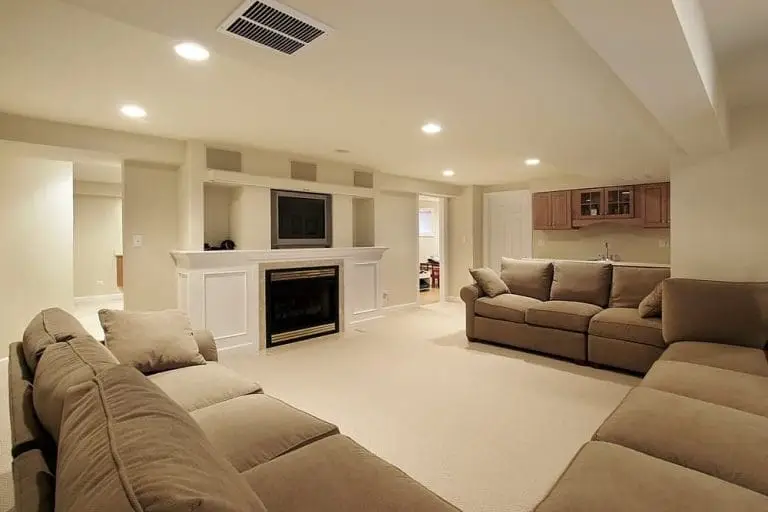
Renovating your basement can be a daunting task, and can come with some unexpected costs. It’s all too common to find that a crack in the wall or foundation may require a costly external sealing project or drain installation, or that the best way to open up that dark space would be to cut a window or patio door into the basement wall. Thankfully, basement renovations can be one of the more economical ways to add value to your home, and the already-present space provided by your basement can make it a viable option for many renovation designs. In order to avoid the burden of unexpected costs or do-overs in your renovation project, it’s best to be prepared for the different expenses you may face, and what you can do upfront to avoid renovations. Here are a few basement renovation cost factors to consider. Humidity levels Before designing the layout of your basement, it’s crucial that the basement be properly sealed to prevent excess moisture from infiltrating through cracks in the walls or foundation. Otherwise, you may end up with a newly renovated basement only to find that it will have to be refinished due to humidity or mold damage. The cost of properly sealing your basement can vary depending on the severity of moisture infiltration, with minor dampness only requiring a coating of sealant on the walls, while more serious moisture issues may require the installation of a drainage system or external sealing. Most sealing projects cost an average of $4,334, with minor leaking issues costing little more than $600 to more serious infiltration problems requiring a drainage system installation costing $10,000 or more. Be sure to consult your contractor to make sure your basement is well-heated and guarded from any excess moisture. Layout Once you’ve made sure that your basement is properly ventilated and sealed to prevent moisture damage, you can begin making this space your own. The more elaborate you choose to make your basement, the greater the cost will be, but here are a few options some of our clients have gone with to transform their basement into the living space of their dreams. apartment for a parent or relative homework station for the kids office space for working from home man-cave for watching the big game recreation room for catching up with friends Many families opt to install a bathroom into their basement, or may have one already and would like to remodel that too. Doing so can be more expensive due to the need for pipes to be run through the home’s foundation, but can still be more economical than adding a bathroom to an upstairs unit, with average basement bathroom renovations ranging from $20,000-$25,000 and main floor  renovations spanning $18,000-$30,000 (bathroom renovation costs). Basic renovation designs for living spaces alone will certainly be less expensive than ornate add-ons like fitness centers or wine cellars, but because of the versatility as a living space that your basement provides, your options for renovation are limited by little more than your imagination and your budget. Material Selection Now that you’ve decide what to include in your renovated basement, you’ll now want to get down to the particulars: color scheme, lighting fixtures, hardwood or carpet, etc. Here are three major categories you’ll need to factor in for your budget, and how to to plan for them. Flooring –  Carpet can be helpful for muffling noise and giving a softer surface if children will be using the space, but is more likely to soak up moisture, which can lead to mold. The resistance of hardwood to moisture infiltration coupled with its more luxurious look typically make it the flooring material of choice, even though it may come with a higher price tag at approximately $10+/sq.ft. Ceilings and windows – There are 3 primary ceiling styles that most renovators choose: gypsum, suspended, and architectural, with prices averaging $2-$3, $5, and $7+ per square foot, respectively. To increase overhead spaciousness and reduce any claustrophobic feel, consider leaving some piping exposed to make for higher ceiling space. Windows and patio doors are other great options for improving upon natural lighting in a basement structure, but cutting into basement walls to add them can cost upwards of $2,000 – and of course, it would need to be accessible as an emergency exit. Paint – Sealants and paint coatings are frequently priced according to the size of the basement. While  square footage and the quantity of paint used are usually the determining parameters for the cost of a paint job, we’ve found that the average cost ranges from about $1,000-$1,600 With so many different parameters to consider, basement renovation costs can vary greatly. Overall, we’ve found that most homeowners spend an average of $35,000-$85,000 on their basement makeovers, or $45-$85/sq.ft. More creative renovation projects such as wine cellars or walk-out basements may cost substantially more, but the versatility and availability of your basement makes it a blank canvas to turn your home into the living space of your dreams. Just account for the preliminary steps of sealing it properly, make use of  inspirational basement galleries to get a vision for the kind of layout you want, and choose your renovation materials, and you’ll have a clear picture of what it will take to make your basement renovation a reality! To get in touch to schedule renovations, you can fill out an online form or give us a call at (613) 727-9427.

Turning Your Basement Into a Rental Unit

Considering Turning Your Basement Into a Rental Unit?

Considering Turning Your Basement Into a Rental Unit? – If you’re looking for a way to make additional income, why not consider turning your basement into a rental unit? With enough square footage and a few basement renovations, you could get back your initial investment and continue to have extra money to use as you need it. Even if you decide that the rental option isn’t the right fit for you down the road, you can still use it to house an aging parent, your eldest child or even use it as your home office. Before jumping into this project, here are some key factors to think about first. Make Sure It’s Up to Code Make sure you take some time to research restrictions and bylaws to see what is legally required and allowed for renting out a basement unit. Different regions can impose different zoning laws and regulations. You’ll need to abide by these, as well as fire escape plans and other safety requirements. Knowing about these prior to beginning can save you a lot of time, money and aggravation in the future. Consider the Cost Versus Your Budget Any home renovation in Ottawa can quickly add up if you’re not careful. To avoid overspending beyond your means, it’s important to have a clear understanding of what your basement will need, how much the project will cost and what your budget is. The cost for remodelling the basement can vary quite a bit. This will largely depend on the current condition of your basement and whether it will need a bathroom, kitchen and other essentials installed. Keep in mind that the average ROI for a finished basement is approximately 70%. So if you ever plan on selling your home in the future, you will be able to recoup a significant amount of that investment in your property value. Talk to a Contractor Once you have an idea of what you’ll need and how much you can spend, it’s time to consult with a contractor. They will be able to guide you through the planning phase, all the way to completing the project. During your consultation, they will help to outline the crucial components, such as the exterior entrance, creating a functional layout, installing independent heating and cooling if necessary, plumbing and electrical systems, and adding proper insulation, waterproofing and more. This will give you a better scope of the renovation before diving into it. Perform Due Diligence Before Hiring  Taking on a basement renovation in Ottawa is a hefty job, and it’s one that you want to ensure is done right. That’s why we recommend doing your due diligence before choosing who to hire. Look for a contractor with ample experience, excellent reviews and a solid reputation for delivering quality work on a timeframe that was agreed upon. A well-established and reputable contractor will be able to thoroughly listen to your needs, offer sound advice and work within the quoted timeline and budget that was agreed upon. Plan Out the Timeframe Basement renovations can also vary in their timeframe. This will of course, largely weigh on how much work the unit will need to get it ready and up to code. Make sure you discuss the timeframe with your contractor so you can prepare and make any necessary arrangements so that renovation doesn’t interfere with your regular schedule. In general, you should expect a basement reno to take at least ten days if it’s mostly finished and requires minor remodelling. However, if a separate entrance needs to be installed, along with plumbing and insulation, you could be looking at five to six weeks. Compare to Other Rental Units in Your Area It can be helpful to search for other rental units in your area to see what they look like, what they are offering or include, and how much they are charging. You can also get some inspiration for your design and layout, learn how to be strategic with limited space or gain some insight into what’s available and what you will be competing with when looking for tenants. Give Us a Call! If you want to transform your basement in Ottawa into a rental unit, contact our team at the Renosgroup.ca. We have been helping homeowners across the city with renovations for every area of the home, including the basement. We take pride in delivering high-quality work and professional, transparent advice. We will always be upfront and honest to help our customers make informed and confident decisions for any home renovation in Ottawa. If you have questions, concerns or need any advice on your basement project, feel free to contact us! Our team is happy to help.

Home Renovation Costs in Ottawa Infographic

Home Renovation Costs in Ottawa

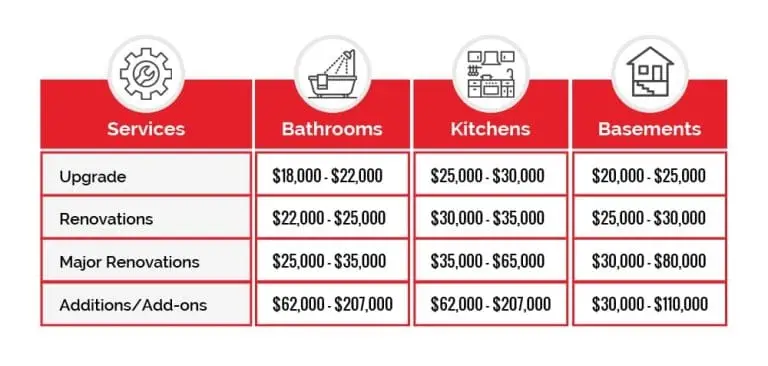
If you’ve decided to renovate your home, you have a huge decision to make. It would be best to find skilled contractors that you can trust with your most precious asset, your home. This can certainly affect your home renovation costs. If you select poorly, you risk incurring severe damages to your house. These include: Major leaks Unsafe electrical work Damage to your foundation Poor craftsmanship These are just a few of the things that can go wrong with an inexperienced crew. That’s why you must seek out the best of the best, like us here at RenosGroup. We’re contractors that you can always rely on in Ottawa, and we’ve got the track record to prove it. So if you want to know what you can expect to pay for a professional renovation, you’re in the right spot. For quick reference, here’s a table breaking down home renovation costs in Ottawa: That will give you the gist of what we charge on average. Read on for more detail on what we charge, why, and a complete list of our services. Contractors in Ottawa: You Get What You Pay For Sure, there are a lot of cheap contractors in the city. Yet, they end up not being worth it for many reasons. For example, here’s a common scenario we encounter all the time. A client calls us in a panic because their newly renovated kitchen is a total mess. The countertops look awful, the tile is wrong, and the kitchen sink sprung a massive leak. Why is it in such disarray? It’s because they went with a cheap contracting service that promised them the world. They claimed they could beautifully renovate their kitchen for next to nothing. Here’s a quick rule of thumb for contractors and pricing; if it sounds too good to be true, it always is. The next thing our client knew, their kitchen became the site of a disaster. Not only that but they got hit with hidden fees and clauses. That’s another common trick of untrustworthy contractors. At the end of the day, they wound up spending thousands more than they would if they had gone with us in the first place. They still had to pay the cheap contractors, plus the hidden fees, plus paying us to fix their mistakes. Trust us; save yourself the hassle and call us at RenosGroup. We charge our prices for a reason because they allow us to ensure premium quality work every time. What to Consider When Researching Contractors We like to educate our clients at RenosGroup. Here are our top factors to consider when looking for a contractor in Ottawa or elsewhere: You get what you pay for in the end. Remember, any contracting service can claim meager prices. The proof is always in the pudding, so be sure to check out reviews before hiring them. Pay close attention to what reviewers have to say about the price quoted versus the price charged. Nine times out of 10, they’re in completely different ballparks. Price isn’t everything. Let’s say that you can hire contractors for dirt cheap rates. Well, dirt cheap rates equal dirt cheap quality. You’ll long forget about how much money you saved when you have to come home to face your dreadful renovations each day. Save yourself the heartache and hire professionals from the get-go! Quality above all else. What matters more than anything is that you receive quality work. When researching contractors, check out user reviews. Please pay close attention to what reviewers say about their craftsmanship. Also, were they professional with the client? Was there a supervisor present at all times to ensure quality? Licensing, insurance, and a legitimate firm that pays taxes. This factor is a huge one. If you choose to do your renovations yourself or hire a crew with no insurance, you could end up on the hook for expensive repairs. If they should make a mistake or do damage to your foundation, it’s up to you to fix it. You also need to hire a legitimate tax-paying company to avoid legal issues. At RenosGroup, we’re licensed, insured, and we always pay our taxes. You’ll be in great hands when you choose us for renovations in Ottawa. Contracts that feature plain English. Shady contractors love to pull tricks with the wording in their contracts, so beware. If the contract seems a little too vague or ambiguous, it’s likely on purpose. That’s so they can sneak in hidden fees and clauses to get more of your money. As a rule of thumb, never sign a contract that you can’t understand. At RenosGroup, all our contracts feature plain English. We spell everything out in as precise terminology as possible. Their level of experience/whether they use subcontractors. When looking for a contracting service, try to find one that doesn’t sub out anything. Of course, we never feature any subcontractors at RenosGroup. That’s because we have a diverse team of experts with varying specialties. If a contractor has to use subcontractors, it’s a tell-tale sign they lack experience. They also give up their quality control whenever they sub out specific jobs. So if you want a fantastic job done no matter what, use us at RenosGroup. Every job that we perform gets done by one of our internal professionals. As you can see, there’s a lot to consider when selecting general contractors in Ottawa. To save yourself some time and hassle, you can use us at RenosGroup. We have all the factors that you see listed above, plus many more. When it comes to getting the most bang for your buck, we provide the most robust craftsmanship and quality work. We’ll never cut corners or use subpar materials to save a buck. Instead, all our time, energy, and effort go toward making your dream home a reality. We’re committed to providing you with superb renovations and home additions at reasonable prices. So if you need the best general contractors Ottawa has available, we won’t let